Decorative Concrete in Naperville, IL
Stained, colored, exposed aggregate, and custom finishes that transform ordinary concrete into something extraordinary.
Concrete does not have to be gray and boring. With the right finish, a concrete patio, driveway, or walkway can rival the look of natural stone, aged brick, or polished tile — at a fraction of the cost and maintenance. Decorative concrete is one of the most versatile ways to add character and value to your Naperville home.
The team at Naperville Concrete Construction offers the full range of decorative concrete techniques: acid and water-based staining, integral coloring, exposed aggregate, stamped patterns, decorative scoring, and overlay systems. Whether you are pouring a brand-new surface or upgrading an existing slab, there is a decorative option that fits your style and budget, and our decorative concrete options guide walks through every technique with pros, cons, and costs.
Refinish Your Existing Slab or Pour New Decorative Concrete?
Every decorative concrete project starts with one question: work with the slab you have, or pour new. Slab condition decides most of it. Stains and score lines need a sound surface, so wide cracks or settled sections point to a new pour. Budget matters too: staining an existing slab costs a fraction of full replacement, and even premium finishes cost less than natural stone or high-end pavers.
The look you want settles the rest. Staining, scoring, stamping, and coloring combine into a one-of-a-kind surface with more design flexibility than any other paving material. If your slab is sound but worn, it is worth having Naperville Concrete Construction assess it before you commit to either route.
Refinishing Existing Concrete: Acid Stains, Water-Based Stains, and Scoring
Acid Staining
Acid stains use metallic salts that chemically react with the minerals in cured concrete, creating rich, translucent, earth-toned colors with natural variation. No two acid-stained surfaces look exactly alike. Colors range from amber and tan to deep brown, green, and blue-black.
Best for: Patios, interior floors, existing slabs needing a refresh
Water-Based Staining
Water-based stains offer a much wider color palette than acid stains — including blues, reds, whites, and custom colors that acid cannot produce. They penetrate and bond with the concrete rather than reacting with it, giving more predictable and consistent color.
Best for: Custom colors, logos, patterns, indoor/outdoor surfaces
Decorative Scoring & Saw-Cut Designs
Shallow cuts are made into the concrete surface to create geometric patterns, tile effects, borders, or custom designs. Often paired with staining, so each scored section can take a different color. A cost-effective way to add visual interest to large, flat surfaces.
Best for: Large patios, garage floors, commercial surfaces
New-Pour Finishes: Integral Color, Exposed Aggregate, and Stamping
Integral Color
Pigment is mixed directly into the concrete before pouring, producing consistent color all the way through the slab. If the surface chips or wears over time, the color remains. It is the most durable coloring method, alone or combined with stamping or scoring.
Best for: New driveways, patios, walkways — any new pour
Exposed Aggregate
The surface cement is washed or chemically removed to expose the stone, gravel, and sand within the concrete. The result is a pebbly, textured surface with natural slip resistance. You can specify decorative aggregates like river rock, quartz, or granite chips for a custom finish.
Best for: Pool decks, patios, driveways, high-traffic walkways
Stamping is also new-pour only: the pattern is pressed into fresh concrete before it cures. See our stamped concrete page for options and pricing, or compare every finish in our complete decorative concrete guide.
How Decorative Finishes Are Applied and Sealed
Whether we are finishing new concrete or transforming an existing surface, here is how we approach every decorative project.
Design Consultation
We visit your property, review stain swatches, color charts, and aggregate samples, and recommend combinations that fit your home's architecture, existing hardscape, and landscape.
Surface Evaluation & Preparation
For new pours, we prepare the subbase with proper grading and compaction. For existing concrete, we assess the surface condition — cleaning, repairing cracks, and profiling the surface so stains and coatings bond properly. Surface prep is the most important factor in a lasting decorative finish.
Color & Finish Application
Depending on the technique, we mix integral color into the pour, broadcast color hardener onto fresh concrete, stain cured surfaces, or expose the aggregate through controlled washing.
Detailing & Accents
We add borders, scoring patterns, saw-cut designs, or contrasting color bands to create visual interest and define spaces. Details like these are what separate a basic colored slab from a custom decorative surface.
Sealing & Protection
A high-quality sealer is applied to lock in color, add depth, and protect the surface from moisture, UV fading, and staining. We match the sealer sheen (matte, satin, or gloss) to your preference. Sealing is essential for all decorative finishes in Naperville's freeze-thaw climate.
With regular resealing, decorative finishes keep their color and character for decades; integral color never fades because the pigment runs through the slab.
Decorative Concrete Cost in Naperville: Refinish vs. New Pour
Refinishing options appear first in the table below, then new-pour finishes. Naperville Concrete Construction prices both routes after an on-site surface evaluation.
Naperville Decorative Concrete Pricing (2025)
| Item | Low Range | High Range | Notes |
|---|---|---|---|
| Acid staining — existing slab (per sq ft) | $4 | $10 | Chemical reaction finish |
| Water-based staining (per sq ft) | $3 | $8 | Wider color range |
| Decorative scoring / saw-cut designs | $2 | $6 | Per linear foot |
| Integral colored concrete (per sq ft) | $8 | $14 | Color mixed into concrete |
| Exposed aggregate (per sq ft) | $10 | $18 | New pour required |
| Stamped concrete (per sq ft) | $12 | $22 | Pattern + color |
Prices reflect Naperville, IL area averages. Staining existing concrete is the most affordable option; stamped and exposed aggregate require a new pour. We provide exact quotes after an on-site evaluation.
Decorative Concrete FAQs
Colored concrete has pigment mixed into the wet concrete (integral color) or broadcast onto the surface during finishing (color hardener). It produces a consistent, solid tone throughout. Stained concrete uses acid-based or water-based stains applied to cured concrete that react with or penetrate the surface, creating translucent, variegated color with a more natural, marbled look. Staining can be applied to existing concrete; integral color requires a new pour.
Yes — staining, scoring, and overlay systems can all be applied to existing concrete in good structural condition. The surface needs to be clean and free of sealers or coatings that would block penetration. Acid staining works particularly well on older concrete because the natural variations in the surface create unique, one-of-a-kind patterns. If your existing slab has significant cracking or structural damage, we may recommend repair or replacement before applying a decorative finish.
The concrete itself lasts 25-30+ years. The decorative finish longevity depends on the method: integral color is permanent (it's part of the concrete), stains penetrate the surface and last 10-20+ years with proper sealing, and surface coatings may need reapplication every 5-10 years. Regular resealing every 2-3 years is the key to maintaining any decorative finish in Illinois weather.
All colored concrete can experience some UV fading over years of sun exposure. Regular sealing with a UV-resistant sealer significantly slows this process. Integral color and color hardener tend to hold up the best because the pigment is throughout the material, not just on the surface. Acid stains create a permanent chemical reaction and resist fading well. We recommend resealing every 2-3 years to keep colors vibrant.
Exposed aggregate is a finish where the top layer of cement paste is removed (usually by washing or applying a surface retarder) to reveal the natural stone, gravel, and sand within the concrete mix. The result is a textured, natural-looking surface with excellent slip resistance. You can choose decorative aggregates — river pebbles, quartz, granite chips — for a custom look. It's a popular choice for patios, pool decks, and driveways in Naperville.
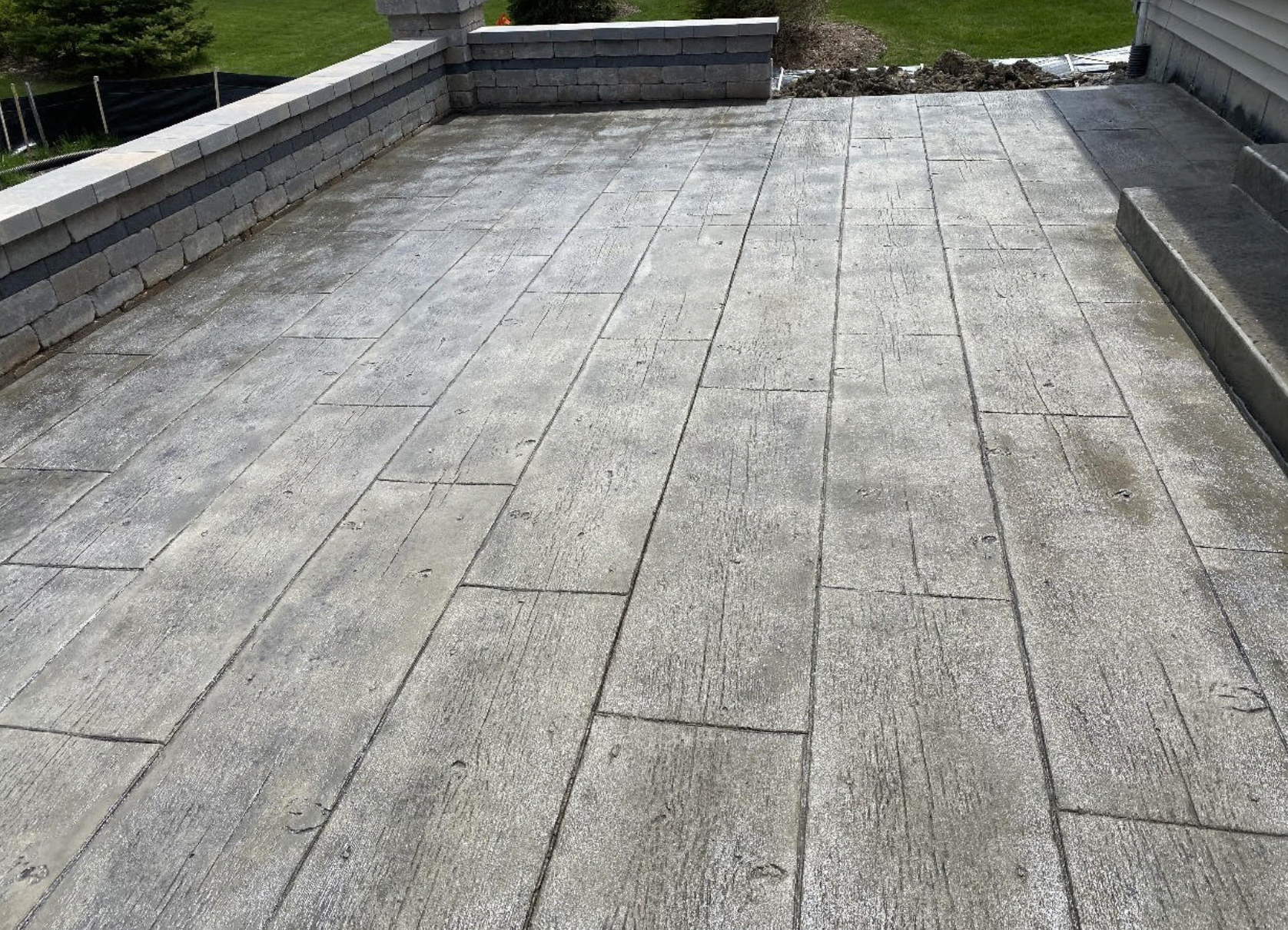
Stamped concrete mimics the texture and pattern of natural materials (stone, brick, wood) and must be done during a new pour. Stained concrete adds color and depth to a flat surface but doesn't create texture or patterns. Stamping costs more but gives a three-dimensional look. Staining is more affordable and can be applied to existing concrete. Many homeowners combine both — a stamped patio with stained borders, for example.
It depends on the finish. Smooth troweled surfaces with a glossy sealer can be slippery when wet. Exposed aggregate and brushed finishes provide natural traction. For any decorative surface in areas prone to moisture (pool decks, entryways), we add a non-slip additive to the sealer that increases grip without affecting the appearance.
Get Your Free Estimate
Tell us about your project and we'll get back to you within 24 hours.