
Concrete That Handles Lisle's Clay Soil and Storm Water
Drainage-first driveways, patios, and repair for clay and floodplain lots.
Standing water on a patio three days after rain, or a concrete driveway heaving where it meets the garage, is not bad luck in Lisle, IL. The village sits on slow-draining clay subsoil beside a working floodplain. In April 2013 the East Branch DuPage River crested at a record 17.5 feet here.
Naperville Concrete Construction treats every pour in Lisle's wetter corners as a drainage project first and a concrete project second. Water under a slab does more damage than traffic on top. When you talk with our Naperville concrete team, grading comes up before finishes do.
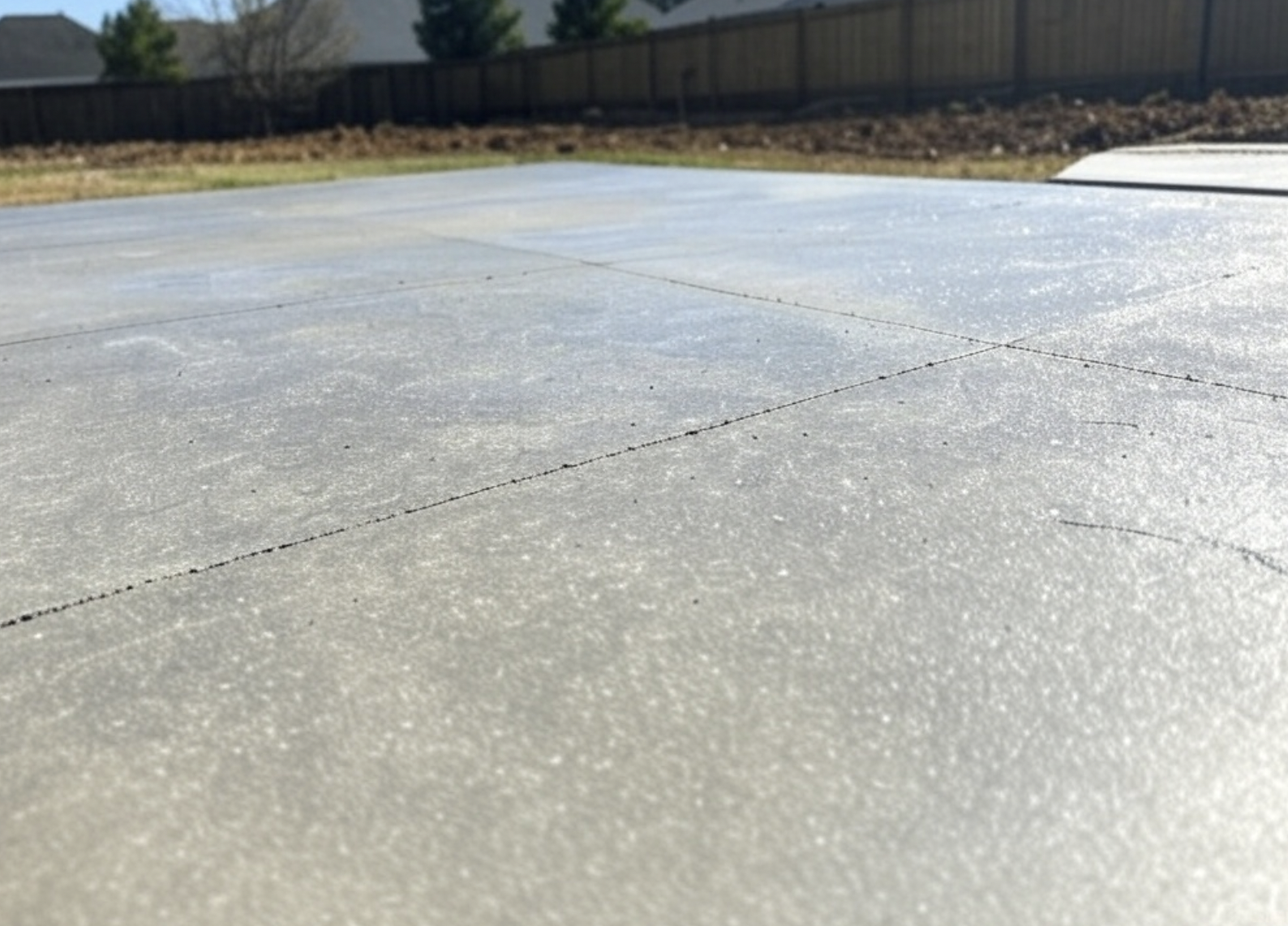
That means excavating past the soft topsoil, setting six inches of compacted washed gravel as a drainage layer, and pitching the finished surface a quarter inch per foot away from the house. Lisle's clay never has to hold the water. The stone and the pitch move it out.
Why Concrete Fails Faster on Poorly Drained Lots
Clay Soils That Hold Water Under Slabs
USDA soil maps for Lisle read like a clay catalog: Ashkum silty clay loam on the flats, Ozaukee and Markham silt loams on the rises, and Sawmill silty clay loam along the river, flagged as frequently flooded. None of these soils drain fast, and all swell when wet.
Swelling is the problem. Saturated clay expands, then shrinks as it dries, and a slab poured directly on it rides that movement. Across Lisle's older patios the result is tilted sections, cracks that telegraph through control joints, and low corners where water collects and refreezes.
A gravel base breaks that cycle because crushed stone holds its shape wet or dry. On Lisle's flats, swapping the top of the clay for compacted aggregate gives the slab a stable, draining platform. The clay still swells below, but the movement no longer reaches the concrete.
Freeze-Thaw Cycles and Slab Heave
Lisle's building code sets the frost line at 42 inches and bars footings from bearing on frozen soil. That figure reflects how far winter cold drives into wet ground. Water in saturated clay freezes, expands roughly nine percent, and lifts whatever sits above it.
The same code table classifies Lisle's weathering as severe, and the village's permit guides require air-entrained concrete for flatwork exposed to freeze-thaw. Air entrainment folds microscopic bubbles into the mix, and freezing water expands into those bubbles instead of blowing the surface apart. That difference decides whether a slab scales or lasts.
Cold-weather rules kick in when average temperatures hold below 40 degrees for more than three straight days without an afternoon recovery above 50. Pours then need protection and adjusted mixes. Drainage still matters most. Dry ground heaves far less than saturated ground, which is why a gravel base pays for itself through a Lisle winter.
Reading the Warning Signs on an Existing Slab
Walk a Lisle driveway in early spring and look for three things: a raised lip at the garage apron, hairline cracks parallel to the slab edge, and dark patches that stay damp after everything else dries. Each points to water moving under the concrete instead of away from it.
A heaved apron usually means water is collecting where the driveway meets the garage footing and freezing there. Parallel cracking signals a base washing out at the edges. Damp patches mark low spots in the subgrade, and in Lisle's clay those low spots only get deeper with time.
Caught early, several of these problems are repair candidates rather than tear-outs. Our concrete repair work covers joint caulking, slabjacking, and partial panel replacement. Caught late, replacement is the honest answer, because patches over a failed base rarely outlast two Lisle winters.
Building Around Lisle's Floodplain and Stormwater Rules
Permits, Fees, and the DuPage Stormwater Ordinance
The Village of Lisle charges a flat $85 for a driveway or apron permit and $125 for a patio, and both applications need a plat of survey with the proposed work drawn on it. Start placing concrete before the permit issues and those fees double under the village code.
Aprons sit in the public right of way, so replacing one requires a certificate of insurance naming the village, $5 million in commercial liability and $1 million in auto coverage. Inspections take 48 hours of notice, including the pre-pour check before any concrete leaves the truck.
Above the village, the DuPage County stormwater ordinance is the flood authority for building work in Lisle. The threshold worth knowing: 2,500 square feet or more of net new impervious surface, compared with what the lot had before, triggers a county stormwater review, and work touching a floodplain can trigger it sooner. A typical driveway stays under it. A driveway plus a large patio may not.
Grading, Pitch, and Where the Water Goes
The April 2013 storm explains why these rules have teeth. Over 7 inches of rain fell, the river ran more than a foot above major flood stage, and more than 300 Lisle homes and businesses were affected. Hard surfaces that shed water carelessly make that math worse.
Lot grading is your end of that system as a Lisle homeowner. New slabs should pitch away from the foundation toward a swale, a yard drain, or the street. The river gauge climbs from action stage at 11 feet to major flooding at 16 feet, and no yard should hurry it.
Check the plat before sketching a patio layout. Lisle's code prohibits patios inside drainage easements, and any other platted easement needs written approval from the easement holder before concrete goes in. Those grassy strips move storm water between properties, and a slab across one blocks the route.
Drainage-First Concrete Driveways and Patios
Driveways: Base Depth and Reinforcement for Wet Lots
Lisle's code writes part of the design. Driveways must be a hard, dustless surface, gravel is prohibited, width runs from 9 feet to 24 feet at the lot line, and the slab needs a 3-foot setback from side lot lines. The drainage details are where judgment enters.
On wet lots the section that works is five inches of air-entrained concrete over six inches of compacted washed gravel, with the excavation cut wide so stone extends past the slab edge. That oversized base drains the edges, which is where winter damage starts on clay ground.
Reinforcement earns its place on soils that move. We tie steel into panels that carry turning loads, then cut control joints on a tight grid so cracking lands where we planned. The full specification lives on our concrete driveways page, including replacement over old fill.
Patios That Stay Dry Through Spring Storms
Lisle's patio setback is 5 feet from every lot line, which often pushes new patios toward the low side of the yard. That is where clay holds water longest, so siting and elevation matter more than pattern or color. A dry concrete patio is designed before it is finished.
The fix starts with elevation. We set the finished surface to fall from the house edge to the yard side, then bed the slab on washed stone that gives storm water somewhere to go. On Ashkum clay that base separates an April puddle from a dry patio.
Downspouts deserve a plan too, because one roof sheds hundreds of gallons in a single storm. We route them under or around new work rather than across it. Layouts and finishes are covered on our concrete patios page, from broom finish to full decorative work.
What Drainage-Smart Work Costs
Across the Naperville area, broom-finish concrete driveway work prices between $8 and $12 per square foot. A standard two-car replacement lands between $3,200 and $5,400 for most lots, larger drives run from $5,400 to $9,000, and oversized or decorative projects can pass $12,000. Those ranges include tear-out, base stone, and grading.
Patios across the Naperville area run $2,400 to $4,800 for a mid-size broom finish, and decorative work can reach $12,000 all in. Stamped concrete runs $12 to $22 per square foot, reaching $25 on small-format work like walkways. Lisle's permit fees ride on top, and the plat, permit, and inspections belong in any quote we write.
Not every concrete slab needs replacement. Where the base is sound, an overlay or resurfacing job can add years of service, often a decade or more, for a fraction of tear-out cost. A written quote from us spells out exactly what the project covers, drainage work included, so you know what you are getting before we pour.
Where We Work Across Lisle
Lisle's neighborhoods drain differently, and the work changes with them. Green Trails spreads more than sixteen hundred single-family homes across hundreds of acres, most built between the mid-seventies and mid-nineties. Concrete from that era is reaching end of life on schedule, and clay is usually why.
Four Lakes is condominium territory from the sixties and seventies, where association approval shapes the work and shared drainage makes careless pours everyone's problem. Beau Bien, off Ogden Avenue since the late sixties, and mid-century Oakview carry original slabs that have ridden Lisle's clay for decades.
Arbor Trails is the newcomer, going in from 2013 onward, the same year the river set its record. Newer grading standards help, but clay does not retire. Oak Hill Estates and the rest of Lisle sit between those cases. The first question never changes: where does your water go?
Permit season and pouring season both reward an early start. A conversation now means the plat review, the Lisle permit, and the pre-pour inspection are done before good weather arrives. Naperville Concrete Construction handles that paperwork from the first site visit to the final inspection.
Call or text (331) 261-5065 and tell us what your yard does after a hard rain. That answer says more than any measurement, and it is where a drainage-first estimate for your Lisle home begins.
Plan Your Lisle Concrete Project Before the Next Wet Season
Tell us about your project and we'll get back to you within 24 hours.