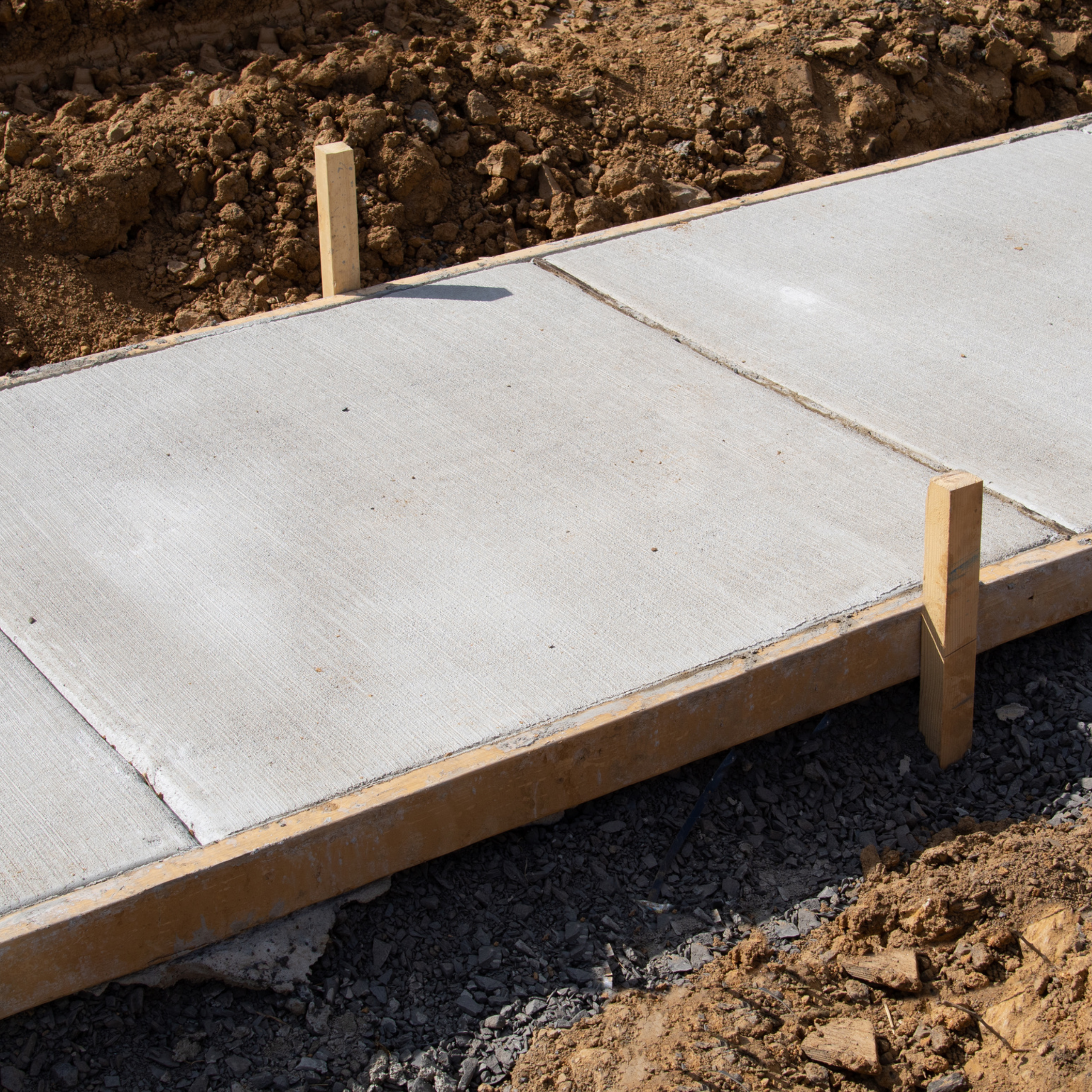
Concrete Leveling and Mudjacking in Naperville: Will Lifting Fix Your Slab?
A sidewalk panel with a trip lip, a driveway section that dropped at the garage, a patio tipping toward the house. Some of those can be lifted back into place. Some are past it. Here is how to tell.
Get a Free Sunken Slab Assessment
Send a photo of the drop and tell us where the downspouts are. We respond within 24 hours.
Will Concrete Leveling Fix a Sunken Slab? Five Questions to Answer First
Most people find this page the same way: someone caught a toe on the front walk, or the driveway panel by the garage now sits an inch below the one next to it. Concrete leveling exists for exactly that problem. It raises a sunken slab by filling the hollow underneath it, and when the slab is a good candidate, it costs a fraction of tearing the section out.
The catch is that word candidate. We pour, repair, and replace flatwork around Naperville, so we see plenty of slabs on both sides of that line. Walk out to yours with these five questions. If every answer lands in the left column, lifting is worth pricing. If two or three land on the right, you are probably looking at partial replacement instead.
Question
Good sign for lifting
Points toward replacement
Is it still one piece?
A slab that dropped as a single panel can be pushed back up as a single panel.
If it has broken into two or more pieces, each piece moves on its own. Lifting them rarely brings back a flat surface.
Did it go down, or did it come up?
Lifting only works on concrete that sank. The void underneath is what gets filled.
A slab pushed up by a tree root or frost has nothing under it to fill. Leveling cannot lower concrete.
Is the surface still sound?
A tight, hard surface with a few hairline cracks is worth raising.
A top that is scaling, crumbling, or spalled will still be a bad surface after it is lifted, just at the right height.
Has it stopped moving?
A section that dropped once and has held its position since is the classic candidate.
If the drop gets worse every spring, something under it is still washing out or shifting. Find that first.
Do you know where the water comes from?
A downspout you can reroute or a low spot you can regrade is a fixable cause.
If water keeps running under the slab, a lift buys time and the slab heads back down.
What Is Mudjacking? Slab Jacking, Concrete Jacking, and Cement Leveling
These are mostly different names for one idea. Small holes are drilled through the sunken slab, material is pumped through them under pressure, and the material fills the void below until it starts pushing the slab up. The operator watches the slab rise and moves from hole to hole so it comes up evenly. When it reaches grade, the holes are patched.
Mudjacking, slab jacking, and concrete jacking all describe the traditional version, which uses a cement-based slurry. HomeGuide describes the mix as water, soil, sand, and cement. Concrete lifting and concrete leveling are the umbrella terms, and they also cover polyurethane foam leveling, sold as polyjacking, poly leveling, or foam jacking. Cement leveling is usually the same search, though be aware that self-leveling cement is also the name of a pourable floor topping used indoors, which has nothing to do with lifting a slab.
What none of them do: fix a broken slab, flatten a hump, or stop the cause of the sinking. The lift puts the concrete back where it was. Keeping it there is a separate job, covered below.
Mudjacking vs. Polyurethane Foam Concrete Lifting
Both raise the slab the same basic way. The differences are in the material, and they matter more on some slabs than others. Figures below are from HomeGuide's 2026 mudjacking cost guide.
| Feature | Mudjacking | Polyurethane foam |
|---|---|---|
| Material | Cement-based slurry (water, soil, sand, and cement) | Two-part polyurethane that expands as it reacts |
| Injection holes | 1.5 to 2.0 inches across | 0.50 to 0.63 inch across |
| Weight on the soil | Heavy; adds load to the ground it sits on | Very light; little added load on weak soil |
| Cure time | About 24 hours | About 15 minutes |
| Water under the slab | Can wash away over time | Waterproof; does not erode |
| National cost per sq ft | $4 to $9 | $8 to $25 |
Source: HomeGuide, How Much Does Mudjacking Cost? (2026). National figures, not local quotes.
Where Mudjacking Makes Sense
Larger slabs on firm ground, plain broom-finished walks and driveways where a row of patched holes will not bother anyone, and jobs where budget is the deciding factor. On a large slab, the lower material cost per square foot adds up.
Where Foam Earns Its Price
Soft, wet ground that would sink further under a heavy slurry, patios and pool decks where small holes matter, and places that have to be back in use the same day. Because foam does not wash out, it also suits spots where some water under the slab cannot be completely stopped.
Why Concrete Slabs Sink in Naperville
Concrete does not sink on its own. The ground under it moves or disappears. Around here, these are the usual reasons.
Water Washing Out the Base
Water that gets under a slab through an open joint or along an edge carries fine soil with it when it drains. Do that for enough storms and a hollow forms. The slab bridges it for a while, then settles into it. A section that sounds hollow when you tap it, or has a gap along its edge where you can push a screwdriver in, is usually sitting over a washout.
Loose Backfill Along the House
When a house is built, the trench dug around the basement walls is filled back in, and that fill is often looser than the undisturbed ground beyond it. It keeps settling for years. A patio, stoop, or walk poured across that strip drops along the house side, which is why so many patios end up tipped toward the back door.
Downspouts and Roof Water
A downspout that empties onto the edge of a walk or driveway puts a whole roof section of water in one spot, every rain. When a panel next to a downspout has dropped, that is the first suspect, and it is the cheapest cause to fix.
Clay and Poorly Drained Soils
The Illinois State Geological Survey's surficial geology map of the Naperville quadrangle shows gray, clayey and silty glacial till across most of the area away from the DuPage River. The USDA describes Drummer silty clay loam, Illinois' state soil and one of the series mapped in neighboring Lisle, as poorly drained. Clay soils swell when wet and shrink as they dry, and poorly drained ground stays wet longer, so a slab here sits on soil that moves with the seasons. A base that was not compacted well before the pour gives way first.
Freeze-Thaw
Water trapped in the soil under a slab freezes, expands, and pushes up, then thaws and leaves the ground looser than before. A winter of that can lift one edge of a panel and drop another. Frost can also push a slab up rather than down, and a heaved slab is not a leveling job.
Where Concrete Lifting Works: Walks, Driveways, Patios, Pool Decks
Sidewalk and Walkway Trip Lips
The textbook case: one walk panel dropped and left a ledge at the joint. Walk panels are small and usually still in one piece, so they lift well. If a tree root pushed the neighboring panel up instead, lifting the low one will not help; the high one has to come out. For the public strip along the street, check with the city before anyone works on it. For new or replacement walks, see our concrete walkways page.
Driveway Sections
Driveway panels most often drop at the garage, where roof water and loose fill meet, and along the edges where water runs off. A section that dropped in one piece can come back up. One that cracked into several pieces under car weight usually gets cut out and repoured. Inside the garage, settled floor sections are their own subject; our garage floor repair page covers them.
Patios Tipping Toward the House
The backfill problem above, showing up where it hurts most: water runs toward the wall instead of away from it. Raising the house side restores the pitch. It is worth checking the gap at the house afterward, because that joint needs to stay sealed.
Pool Decks
Settled deck panels around a pool create both a trip hazard and a drainage problem. Foam is often chosen here for its small holes. Lifting near a pool shell or its plumbing is specialist work, so ask the company how they handle it. Our concrete pool decks page covers new decks.
Keep a Leveled Slab From Sinking Again
Lifting fills the hole. It does not turn off whatever made the hole. If the water is still getting under the slab, the new fill is just the next thing to wash out or settle. Before or right after any lift, deal with these:
- 1
Move the downspouts. Extend them past the edge of the concrete or into a buried line that carries water away. This one change prevents more repeat sinking than anything else on this list.
- 2
Fix the grade along the edges. Soil and mulch beds should slope away from the slab and the house, not hold water against the concrete edge.
- 3
Seal the joints and cracks. An open joint is a funnel into the base. Once the slab is up, the joints and any hairline cracks should be sealed with a flexible sealant.
- 4
Watch it through one winter. A slab that holds its height through a freeze-thaw season has probably found its footing. One that starts dropping again is telling you the cause is still there.
Sealing the surface itself is a separate decision; our guide to sealing concrete covers when it is worth doing.
How Much Does Mudjacking Cost? Slab Jacking and Foam Prices
Leveling is usually priced per slab or per raised section locally, and per square foot in national cost guides. Both are shown below so you can compare the quotes you get.
Typical Concrete Leveling Price Ranges
| Item | Low Range | High Range | Notes |
|---|---|---|---|
| Mudjacking, per slab or raised section (Naperville area) | $300 | $800 | Cement slurry lift |
| Polyurethane foam lifting, per slab (Naperville area) | $500 | $1,200 | Lighter material, smaller holes |
| Mudjacking, per sq ft (national, HomeGuide 2026) | $4 | $9 | National average range |
| Foam lifting, per sq ft (national, HomeGuide 2026) | $8 | $25 | National average range |
Naperville-area ranges are the per-section figures on our concrete repair page. National per-square-foot ranges are from HomeGuide's 2026 mudjacking cost guide. Neither is a quote; the slab, the void, and the access set the real price.
How far it dropped
A two-inch drop takes far more fill than a half-inch lip. The material pumped under the slab is the part of the bill that grows with depth.
How big the void is
Washouts are rarely the size of the slab. A hollow that runs under the next panel, or back under a porch, keeps taking material until it is full.
Number of sections
Setup is the same whether one walk panel is raised or six. Several sections in one visit cost less per section than one at a time.
Minimum charges
HomeGuide's 2026 guide notes most mudjacking contractors charge a minimum job fee of $300 to $700, so a single small panel rarely costs less than that.
Joint and crack sealing
Sealing the joints after the lift keeps water from going straight back under the slab. Ask whether it is included.
Slab jacking cost and mudjacking cost are the same number by another name. When comparing a mudjacking quote with a foam quote, compare the same units: per section against per section, not per section against per square foot.
Lift the Slab or Replace the Section?
Lifting wins when the slab is the right shape and only in the wrong place: one piece, sound surface, dropped once, cause fixable. It is fast, there is no demolition, and the cost above is a small share of what a new section runs.
Replacement wins when the slab itself has failed. Broken into pieces, heaved, scaling across the top, or sitting over a base that keeps washing out: lifting any of those spends money to put a bad slab back at the right height. In those cases the lasting fix is to cut out the failed section, rebuild and compact the base, and pour a new one tied into the slabs around it. Our concrete repair page covers partial slab replacement and crack work, and the repair or replace guide walks through judging the damage yourself.
One more honest point: a resurfacing overlay does not fix a sunken slab either. An overlay follows the slab under it, so a low panel stays low. If the surface is also worn, the order is lift or replace first, then resurface once everything sits flat.
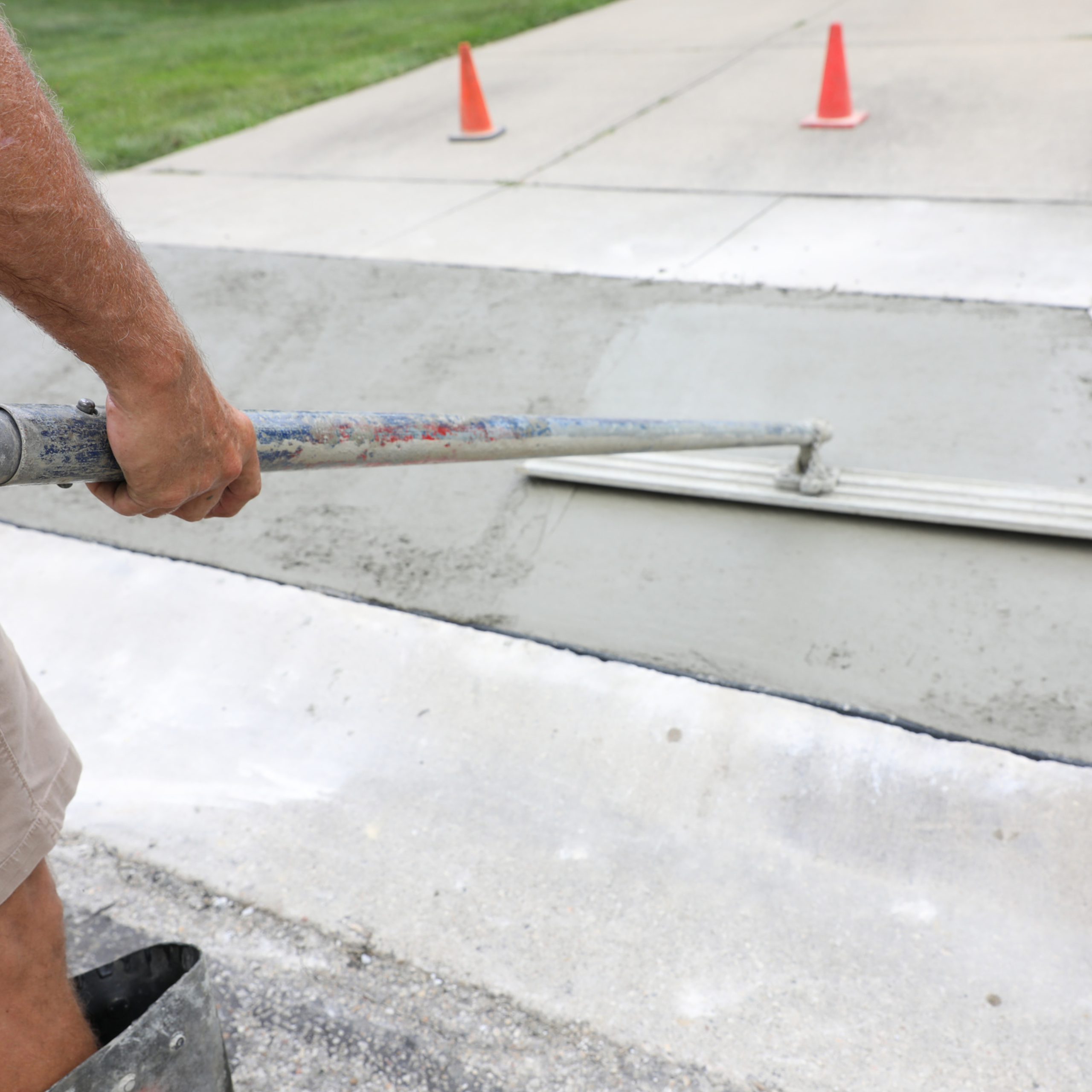
Questions to Ask Before You Hire for Mudjacking or Foam Lifting
A good answer to each of these tells you the company looked at your slab and not just its square footage.
- Which method do you use, mudjacking or foam, and why that one for this slab?
- Where will the holes go, how big are they, and how are they patched?
- How high can this slab come up before it cracks, and what happens if it does?
- What do you think caused the drop, and does your price include fixing it or just lifting?
- Are the joints and cracks sealed after the lift, or is that extra?
- When can we walk on it, and when can we drive on it?
- Is there a minimum charge, and is the price per section, per square foot, or per job?
If the answer to the cause question is a shrug, keep looking. Any slab can be raised once. Whether it stays up depends on the water.
Concrete Leveling FAQs
Often, yes. Concrete leveling, also called slab jacking or mudjacking, pumps material under the sunken slab through drilled holes until it rises back toward grade. Mudjacking uses a cement-based slurry; polyurethane foam lifting uses an expanding foam that is much lighter. Either one only works when the slab itself is in good shape: one piece, a sound surface, and a drop caused by the ground underneath settling or washing out. Broken, heaved, or crumbling slabs are usually better off replaced.
Yes. Mudjacking, slab jacking, slabjacking, and concrete jacking all describe the same thing: pumping a slurry under a slab to lift it. Concrete lifting and concrete leveling are the umbrella terms that also cover polyurethane foam, which some companies call polyjacking or foam jacking. Cement leveling is usually the same search, though a self-leveling cement floor topping is a different product entirely.
HomeGuide's 2026 mudjacking cost guide puts a properly done mudjacking job at 5 to 10 years or longer, and notes that it depends more on fixing the cause of the settlement than on the lift itself. In plain terms: a slab lifted with the downspout still dumping beside it is likely to go back down, while a slab lifted after the water is redirected has a far better chance of staying put.
It depends on the material. HomeGuide's 2026 guide lists mudjacking as ready for light foot traffic within 24 hours and full vehicle use within 2 to 3 days, and lists the cure time for polyurethane foam at about 15 minutes. Ask the company doing the work for their own timeline, since temperature and the size of the job change it.
Yes, a little. The holes are filled with a cement patch, but new patch material rarely matches weathered concrete exactly, so you can usually see a row of small circles. Foam needs smaller holes than mudjacking, which is one reason it is chosen for patios and pool decks where looks matter more.
A slab with a hairline crack can usually be lifted, and the crack sealed afterward. A slab broken into separate pieces is a poor candidate, because the pieces rise unevenly and often end up with a new lip at the crack. If the crack has one side higher than the other and keeps getting worse, the slab is still moving, and replacing that section is usually the lasting answer.
Often, yes. A patio that settled along the house side can be raised so water runs away from the wall again, as long as the slab is in one piece. It is worth doing soon, because a patio tipped toward the house sends rain water straight at the wall all season.
Not sure which side of the line your slab is on? Our Naperville concrete team will look at it and tell you whether it is a lifting candidate or due for a new section.
Get a Free Look at Your Sunken Slab
Send a photo of the drop and tell us how long it has been moving. We will tell you whether it is a lifting candidate, or price the section replacement if it is past that point.