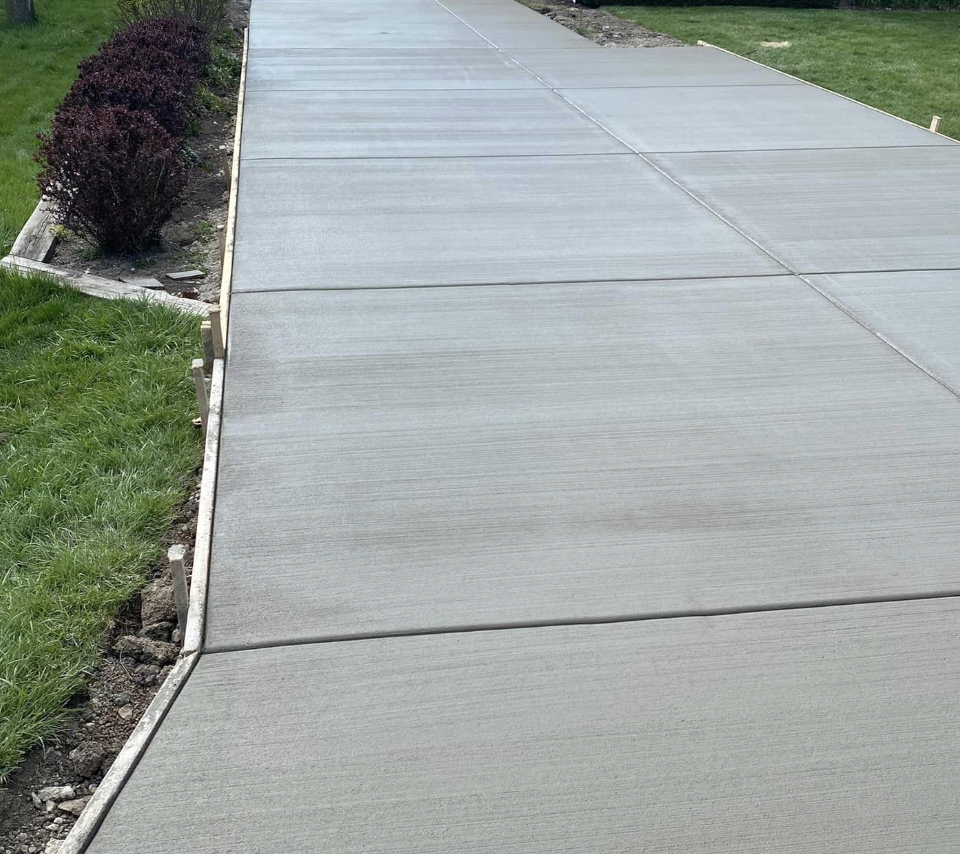
Concrete Resurfacing in Naperville, IL
A new surface over your old slab, for a fraction of tear-out cost. It only works on concrete that is sound underneath, so that is the first thing we check.
Get Your Free Estimate
Tell us what the surface is doing. A photo helps. We respond within 24 hours.
Can You Resurface Concrete That Is Cracked, Sunken, or Heaved?
The question that decides a resurfacing job is not what the new surface will look like. It is whether the slab underneath can carry it. A bonded overlay is thin, and it does exactly what the concrete below it does. If that concrete is solid and only the top has worn out, an overlay gives you a new surface and roughly 10 to 15 more years. If the base has washed out or the slab is still moving, the overlay cracks right along with it, usually by the first spring.
That is why we turn down resurfacing work that would be easy to sell. A homeowner who pays for an overlay on a failing driveway ends up paying for the replacement anyway, a few seasons later. Here is the line we draw on every estimate.
Good Candidates for an Overlay
- Scaling, flaking, or pitting from road salt across the surface
- A finish worn smooth, dusty, or blotchy with age
- Hairline cracks that have stopped moving
- Old patches that no longer match the slab around them
- Sections that sit flat and solid when you stand on the edges
Signs an Overlay Will Fail
- A section rocks, sounds hollow, or has dropped below its neighbor
- Cracks with one side higher than the other, or wider each spring
- A slab pushed up by a tree root or frost, with a hump you can see
- Water that ponds in the same low spot after every rain
- Concrete that crumbles when you scrape it with a screwdriver
If your slab has a few items from the second list, the fix starts with concrete repair for the cracks, spalls, and settled sections, or with replacing the sections that have failed. Resurfacing can follow once the base is right.
Types of Concrete Resurfacing Overlays
All of these are cement-based and bond to the old slab. They differ in thickness, texture, and where they hold up best.
Polymer-Modified Resurfacer, 1/4 to 1/2 Inch
The workhorse for driveways and walks. Portland cement, fine sand, and polymers that improve bond and flexibility, placed thick enough to fill shallow pitting and carry tire traffic. It is usually finished with a broom texture so it matches the look and grip of standard exterior concrete.
Microtopping and Skim Coats
Thinner coats troweled on in layers for a smooth, uniform finish. Good for covering blotchy color or old patches on a slab that is otherwise in good shape. Thin coats do not fill deep spalls on their own, and a smooth finish can get slick when wet, so outdoors we add texture or a grit additive in the sealer.
Spray Texture and Knockdown
The overlay is sprayed on in a splatter pattern, then lightly troweled flat on top. The result has a textured, grippy feel that stays cooler underfoot than a dense smooth surface, which is why it shows up so often around pools and on patios.
Patterned Overlays
A thicker overlay mix can be imprinted with stone, slate, or brick patterns and colored, giving an existing slab the look of new stamped concrete without a tear-out. Any overlay can also take color or stain; our decorative concrete page covers those finish options.
How We Resurface Concrete: Prep, Joints, Overlay, Cure
Most overlay failures are prep failures. The overlay itself is the fast part of the job.
Sound-Base Check
Before we talk about color or texture, we walk the slab. We tap for hollow spots, stand on edges and corners to feel for rocking, read the cracks for height difference, and look at where water sits. If the base has failed, we tell you resurfacing is the wrong fix and price what is right instead.
Clean & Strip
The surface is pressure washed to remove dirt, oil, and loose paste. Any old sealer or paint has to come off completely, because an overlay bonds to whatever is on top. Sealer left on the slab means the overlay is glued to the sealer, not the concrete.
Mechanical Profile
We grind or shot-blast the surface to open it up and give it a texture the overlay can grip, rated on the industry's concrete surface profile scale. A slab that feels like smooth glass will shed an overlay. Acid etching alone does not give a dependable profile, so we do not rely on it.
Fix the Damage Underneath
Deep spalls are cut back to sound concrete and patched, and cracks are filled before the overlay goes down. Resurfacing hides damage; it does not fix it. The repair work underneath is what keeps a pothole from showing back up through the new surface.
Mark & Carry the Joints
Every existing control joint and expansion joint is located and marked before we apply anything. After the overlay goes on, the joints are cut or tooled back through it in the same place. Skip this step and the overlay cracks along every joint line in the first year.
Apply & Texture
The polymer-modified overlay is mixed, applied in one or more coats, and finished to the texture you chose: smooth trowel, broom, or a sprayed knockdown. Edges at the garage, the house, and the street are detailed so the new surface does not end in a thin, chip-prone lip.
Cure & Return to Use
Foot traffic is usually fine within about a day. Vehicles wait a few days, depending on the product and the weather. We give you the exact dates before work starts, and we tell you when the surface is ready to seal.
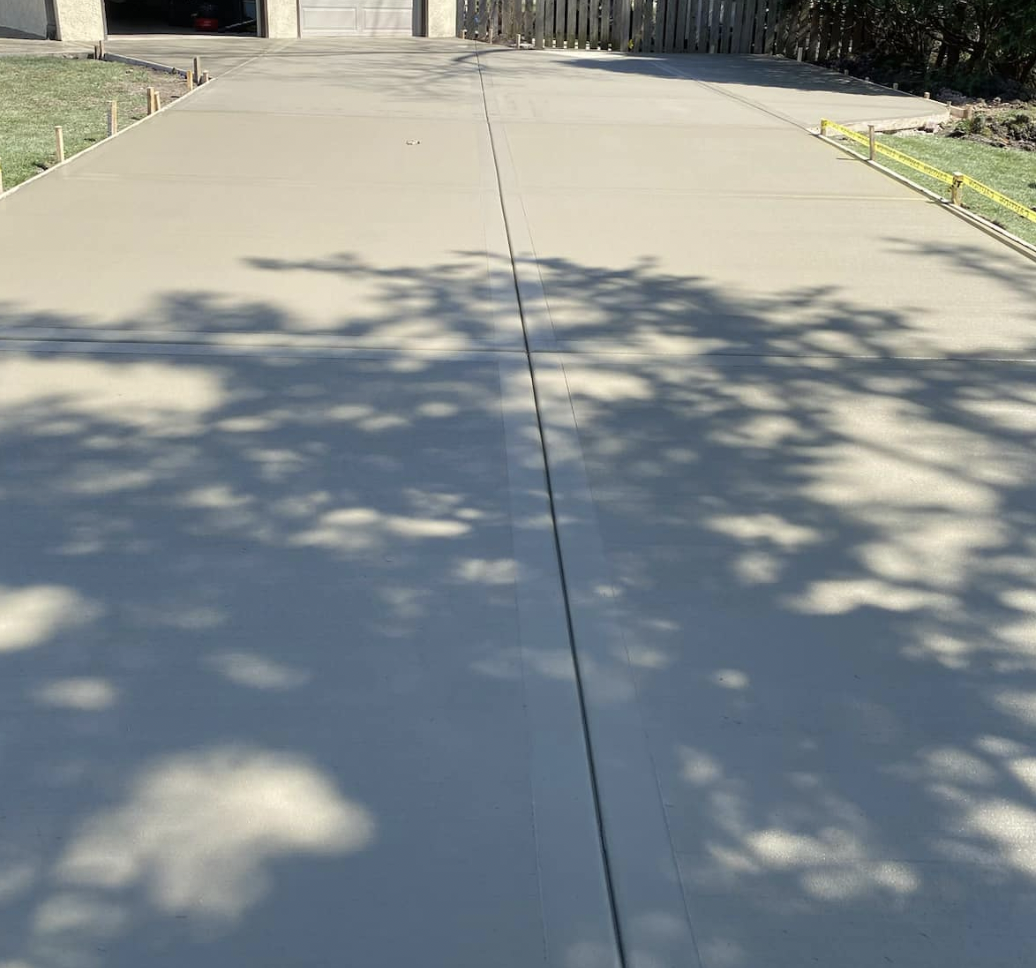
Driveway Resurfacing: Tires, Road Salt, and the Street End
A driveway is the hardest test for any overlay. It takes the weight of every car, the twisting of tires turned in place, and a winter of salt brine dripping off wheel wells. Concrete driveway resurfacing works well when the drive is sound and the damage is in the top layer, which describes a lot of driveways around Naperville: a surface that has scaled and pitted in the tire paths while the slab underneath still sits flat and tight.
The street end usually looks worst. Plows push salted slush onto the bottom of the drive and it sits there all winter, so scaling and spalling concentrate where the drive meets the street. If that end is only scaled, it gets patched and resurfaced with the rest of the drive. If it has cracked through and dropped, that section gets replaced first, then the overlay goes over the whole drive so the surface matches.
Hot tires and film sealers do not mix. A glossy, film-forming sealer on a driveway can soften under hot tires and lift off in the shape of the tread, a problem known as hot-tire pickup. That is one reason our concrete sealing guide points driveways toward penetrating sealers, and it applies to a resurfaced drive the same way.
Plan the cure around your cars. You can walk on a resurfaced driveway within about a day, but vehicles wait a few days, longer when nights are cool. Plan where the cars will park, and keep heavy trucks, trailers, and dumpsters off the new surface. Most overlay products also have a minimum application temperature, so in Naperville, driveway resurfacing is spring through fall work.
Patio Resurfacing: Texture, Footing, and Pool Surrounds
Patios do not carry cars, so the overlay choice is driven by how the surface looks and how it feels underfoot. A patio that has gone blotchy or has a few mismatched patches is a natural fit for patio resurfacing: the overlay gives one consistent color and texture across the whole slab, and it can take color, stain, or a pattern if you want more than a fresh gray surface.
Wet feet change the choice. Around a pool, on a back walk that stays shaded and damp, or on a patio where the downspout empties, grip matters more than looks. A spray-knockdown or broomed overlay holds footing far better than a smooth troweled one, and a slip-resistant additive can go into the sealer coat. For new pool surrounds, see our concrete pool deck work.
Check before you resurface a patio
- Door thresholds. An overlay adds 1/4 to 1/2 inch. A slab already tight to the door sill may need its edge tapered.
- Slope. The overlay follows the slab. A patio pitched toward the house stays pitched toward the house.
- The joint along the house. The isolation joint between patio and foundation must stay open, not get buried under new material.
- Furniture and grills. Most patios are usable within about a day; heavy items wait until we say the overlay is ready.
Will Resurfaced Concrete Hold Up to a Naperville Winter?
It will if the slab is sound and the surface is protected. Here is what it is up against.
Freeze-Thaw and Deicing Salt
Water soaks into the surface, freezes, expands, and pops off the top layer, over and over from fall into spring. Salt brine makes it worse by keeping the surface wet and attacking the cement paste. That is the same damage that sends most homeowners looking for resurfacing in the first place. Woodridge and Warrenville, both next door, list the weathering category as "severe" in their adopted residential code tables, the harshest of the code's three ratings. A new overlay faces those same winters, so keep rock salt off it the first winter and use sand for traction.
Clay Under the Slab
The Illinois State Geological Survey's surficial geology map of the Naperville quadrangle shows gray, clayey and silty glacial till across most of the area away from the DuPage River. Clay holds water, swells when wet, and shrinks when dry, and that movement is what opens the cracks that keep moving after they are filled. It is the main reason the sound-base check comes first: a crack that moves with the soil will show up again through any overlay.
Protecting the New Surface
A resurfaced slab should be sealed once the overlay has cured, and resealed on schedule after that. The sealer keeps water and brine out of the new surface, which is the whole game in a freeze-thaw climate. Our guide to sealing concrete covers which sealer to use where and how to tell when it has worn off.
Concrete Resurfacing Cost in Naperville
A full overlay runs $5 to $12 per square foot, a fraction of what tear-out and repour costs. Where your job lands in that range comes down to the slab, not the overlay.
Naperville Concrete Resurfacing Pricing
| Item | Low Range | High Range | Notes |
|---|---|---|---|
| Full resurfacing overlay (per sq ft) | $5 | $12 | Bonded overlay system |
| Typical residential repair or resurfacing project | $1,500 | $6,000 | Size and prep drive the total |
Prices reflect Naperville, IL area averages. Actual cost depends on slab condition, prep, repairs needed, and finish. We provide exact quotes after an on-site inspection.
Prep the slab needs
Stripping an old sealer, grinding a hard troweled surface, or cutting out deep spalls all add labor before any overlay is mixed.
Repair work underneath
Crack filling and patching are priced on top of the overlay. A slab with heavy salt damage costs more to bring back than one that is just worn.
Square footage
Setup and cleanup cost about the same on a small walk as on a long drive, so small jobs land higher per square foot.
Overlay type and finish
A single broom-textured coat sits at the low end. Multiple coats, spray texture, color, or a patterned overlay move the price up.
Joints, edges, and transitions
Driveways with many joints, garage door transitions, and edges against the house or street take more detail work.
Driveway resurfacing cost tracks the same factors. Long drives with a few joints come in lower per square foot than short drives with a garage transition, a scaled street end, and deep spalls to cut out first.
Resurface or Replace the Slab?
Resurfacing wins when the problem is the surface: scaling, pitting, wear, old patches, a finish you are tired of. Replacement wins when the problem is the slab: broken through, sinking in more than one place, heaved, or sitting on a base that has washed out. A middle path works on a lot of driveways: replace the one or two failed sections, let the new concrete cure for several weeks, then resurface the whole drive so it reads as one surface.
Our repair vs. replacement guide walks through how to judge the damage yourself before anyone comes out. When replacement is the answer, we pour new concrete driveways and patios too, so you get the same straight answer either way. Inside the garage, the same overlay methods apply with their own wrinkles; see garage floor repair.
Permits for Overlays
In Naperville, an overlay that does not change the footprint may not need a permit, as our driveway permit guide explains, but check with the city first. Neighboring towns differ: Woodridge lists overlays inside its driveway permit category, as our Woodridge concrete page notes.
Concrete Resurfacing FAQs
Resurfacing bonds a thin layer of polymer-modified cement, usually 1/4 to 1/2 inch, over your existing slab. It gives you a fresh, uniform surface without tearing out and repouring the concrete. It works when the slab is structurally sound but the top has failed: pitting, salt scaling, a worn finish, or old patches. It does not fix a slab that is sinking, heaving, or cracked through.
On a sound slab with proper prep, a bonded overlay adds roughly 10 to 15 years of service. Prep decides most of that: an overlay over leftover sealer or a smooth, unprofiled surface can delaminate within a couple of seasons. Traffic, road salt, and whether the surface is kept sealed decide the rest.
Over cracks that have stopped moving, yes. They are cleaned out and filled first, then covered. Over cracks that are still moving, no. A crack that opens and closes with the seasons will reflect straight up through the overlay, usually within the first winter. If one side of a crack sits higher than the other, the slab underneath is moving and resurfacing is the wrong fix.
Walking is usually fine within about a day. Cars wait a few days, and longer in cool weather, because the overlay needs to gain strength before it takes tire loads and turning. The product, the thickness, and the temperature all change the number, so we give you the exact date before we start.
Often not, when the overlay does not change the driveway's footprint, but check with the city before work starts because rules change and every town writes them differently. Next door in Woodridge, for example, the village's driveway permit category explicitly includes overlays. If a permit is needed for your job, we tell you before you sign.
Slightly. A typical overlay adds 1/4 to 1/2 inch. That matters at door thresholds, the garage door seal, and where the slab meets a public sidewalk or the street. We check every transition during the estimate and plan how each edge will be finished so nothing ends in a lip that trips feet or catches a plow.
No. An overlay follows the slab it bonds to, so a low spot stays low and a slab that pitches toward the house still pitches toward the house. Small surface dips can sometimes be filled during prep, but a section that has settled needs to be raised or replaced before it is resurfaced.
Questions about your slab specifically? Our Naperville concrete contractors will look at it and tell you whether it is an overlay candidate.
Get a Concrete Resurfacing Estimate in Naperville
Send a photo of the worst spot and tell us how old the slab is. We will tell you whether resurfacing will last or what to do instead.